
Leaner, Stronger and Faster at 40
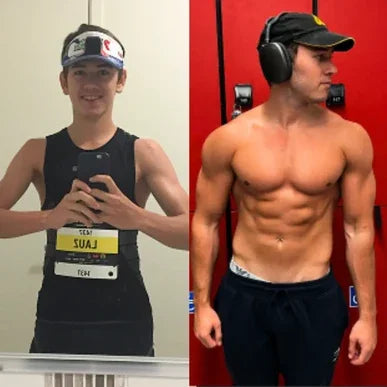
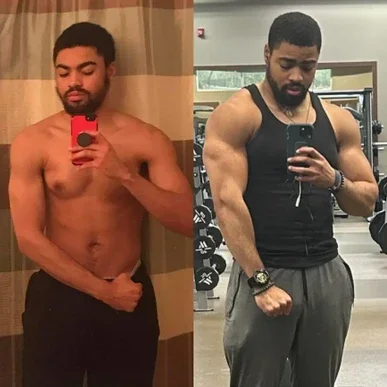
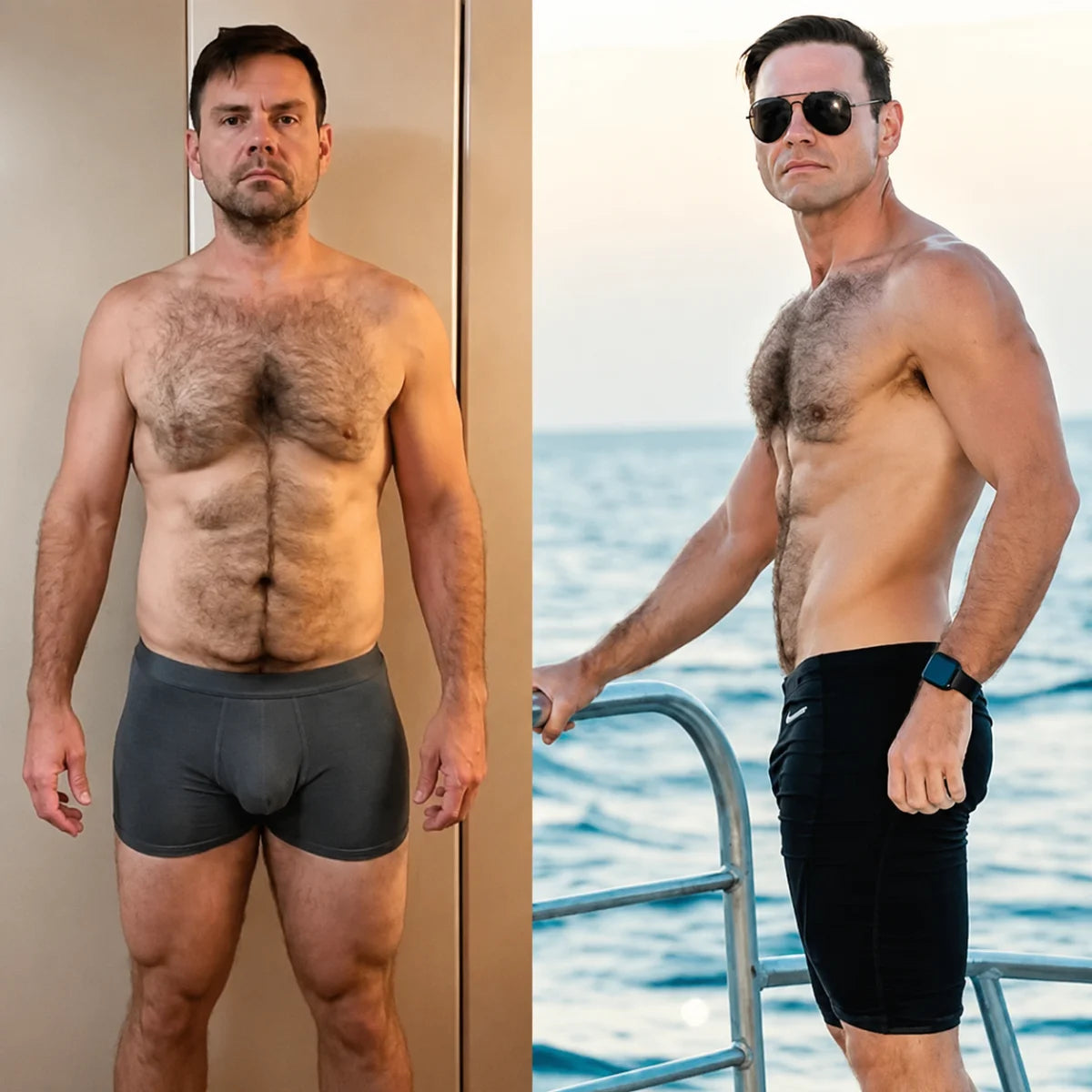
Jerrod lost more than 15 pounds in 60 days while increasing his full-body strength and significantly improving his 5K run time after we gave his diet more structure and his training more direction.
The Objective
Jerrod’s goal wasn’t just a smaller number on the scale. He wanted to drop body fat while maintaining muscle, shave time off his 5k, and build full-body strength. Achieving these concurrent adaptations is entirely possible, but it requires precise management of stress and recovery. If we slashed his calories too aggressively, his body would simply cannibalize muscle tissue for energy to make up the deficit. On the flip side, if we had him running five days a week, the accumulated fatigue would tank his resistance training. You cannot build strength if your nervous system is too fried to move heavy weight.
The Cruise Ship Diet
To establish a baseline, I had Jerrod track his food for a week. He was living and working on a cruise ship, which meant navigating a unique environment of limited choices and endless buffets. That initial tracking exposed massive nutritional gaps he didn't realize existed. Instead of fighting the ship's ecosystem, we exploited it. I built a dietary strategy around the high-protein and high-fiber options available in the galley. Protein preserves muscle tissue during weight loss, while fiber slows digestion to keep satiety high. This allowed us to push him into a caloric deficit to drive fat loss without him actually feeling like he was starving.
Training With The Full Picture In Mind
The biggest shift in Jerrod's training was deliberately having him do less. Previously, he spent hours in the gym grinding through random, difficult exercises that drained his energy but failed to trigger specific physical adaptations. We cut the fluff and streamlined his programming. Using my training app, he began strictly tracking his workouts to ensure progressive overload, incrementally increasing weight or reps each week to force the muscle to grow. By making his lifting sessions shorter and highly efficient, we preserved his physical recovery capacity for his running goals. He ultimately got stronger, faster, and leaner, all without adding a single minute to his training schedule.
Why Fat Loss, Strength and Running Performance Can Coexist
Fat loss requires an energy deficit over time, but the size and duration of that deficit matter when preserving lean mass is a priority. Resistance training provides a muscular stimulus during periods of reduced energy intake and can help maintain strength and lean tissue. Research also suggests that prolonged energy deficiency can make gains in lean mass more difficult even when strength can still improve.
Strength and endurance training can also be performed concurrently. Research examining concurrent training shows that resistance exercise and aerobic training can improve multiple aspects of fitness when programmed appropriately. For someone pursuing both strength and a faster 5K, the objective is not necessarily to choose between lifting and running, but to manage training stress, recovery and progression across both.